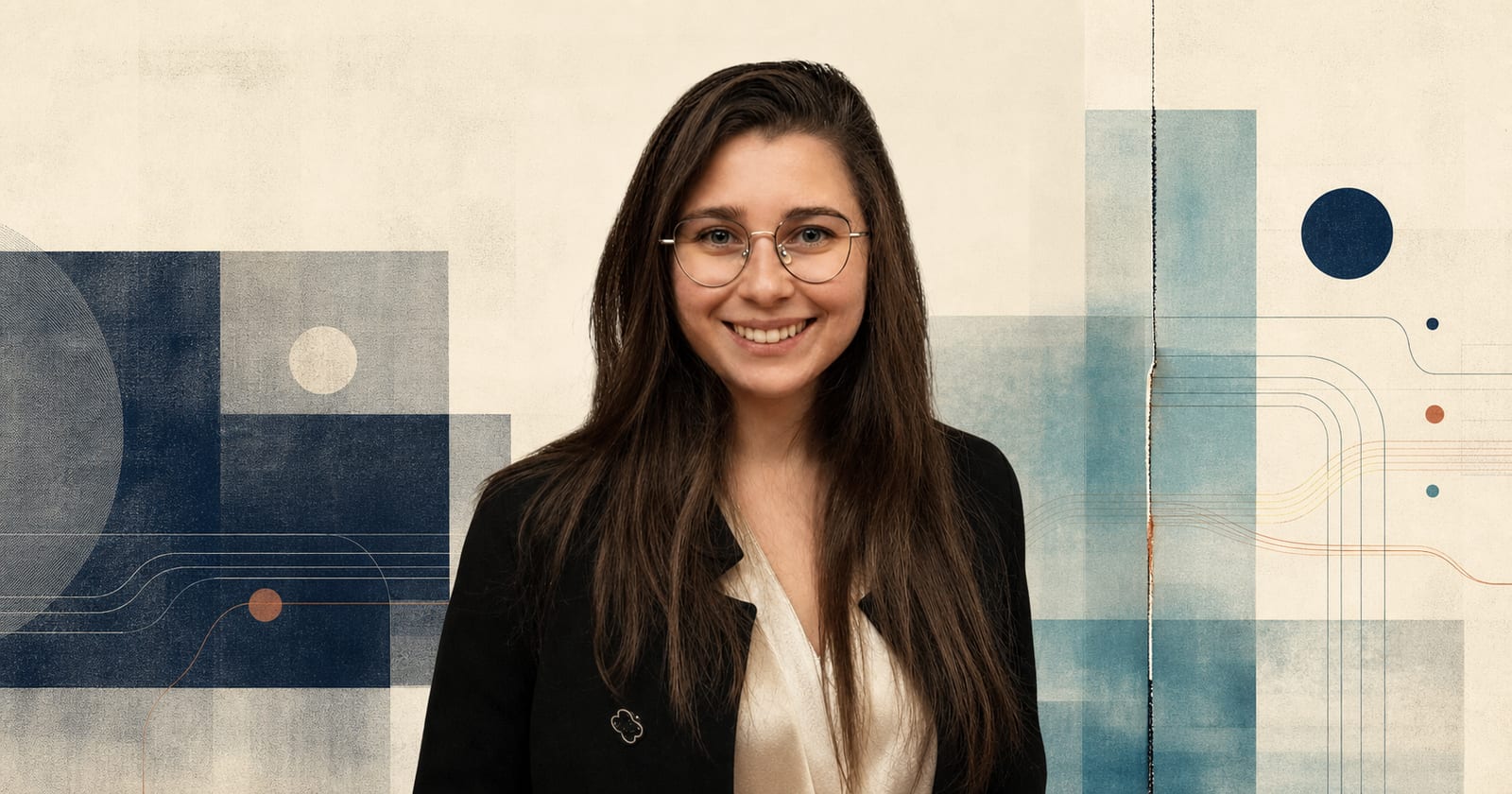
Şeyma Sarıgil’s public record is unusually easy to inspect. There is peer-reviewed research, open-source code, reusable Turkish language resources, and years of community teaching.
She joins the first LatentShift lineup as a Generative AI Architect at Softtech. Her work spans software engineering, machine learning, natural language processing, LLMs, and multi-agent systems. That breadth matters, but it is what she does beyond her day job that makes the picture more complete.
A foundation wider than generative AI
Şeyma’s path into today’s AI systems did not begin with the current wave of models. Her background includes full-stack software development, applied machine learning, and postgraduate work focused on natural language processing.
In 2021, she co-authored a peer-reviewed study on machine-learning classification. The researchers compared five methods for distinguishing two varieties of pumpkin seeds from morphological measurements. It is a compact example of a much longer-running practice: start with real data, compare approaches, and make the evaluation visible.
Her current GitHub profile describes her as an NLP specialist, open-source advocate, and technical leader of the Nane&Limon Turkish NLP community.
Building Turkish NLP resources in the open
Nane&Limon is a volunteer community whose repositories turn Turkish NLP work into material other people can inspect and reuse.
One project, TurkishNLPGuide, gathers Turkish-language NLP resources into a practical starting point for learners and practitioners. Another, Mintlemon, is a Turkish NLP library developed during the team’s 2023 TEKNOFEST work, where the repository records a first-place finish.
The work did not stop at a competition entry. Mintlemon became an installable package, and Şeyma’s PyPI profile also lists randetect, a small text-analysis tool. Publishing software this way changes who can benefit from it. A result becomes something another developer can test, question, extend, or teach with.
Making knowledge reusable
Research, package publishing, technical leadership, and teaching can look like separate lines on a résumé. In Şeyma’s public work, they reinforce one another. Technical knowledge becomes more valuable when it leaves the original project and gains documentation, examples, and a community around it.
That is the kind of contribution we want to recognize in a speaker profile. It tells us not only what somebody works on, but how they participate in the wider engineering ecosystem.
We are delighted to welcome Şeyma to the first LatentShift edition in İstanbul on 17 October. You can get to know more of her work through GitHub, Nane&Limon, and LinkedIn.