Every first edition begins as an argument: this room ought to exist.
Then the argument becomes a list of obligations. A venue has to be secured, a stage has to work, talks have to be recorded, access has to be designed in, and tickets have to remain within reach of the community the event was built for.
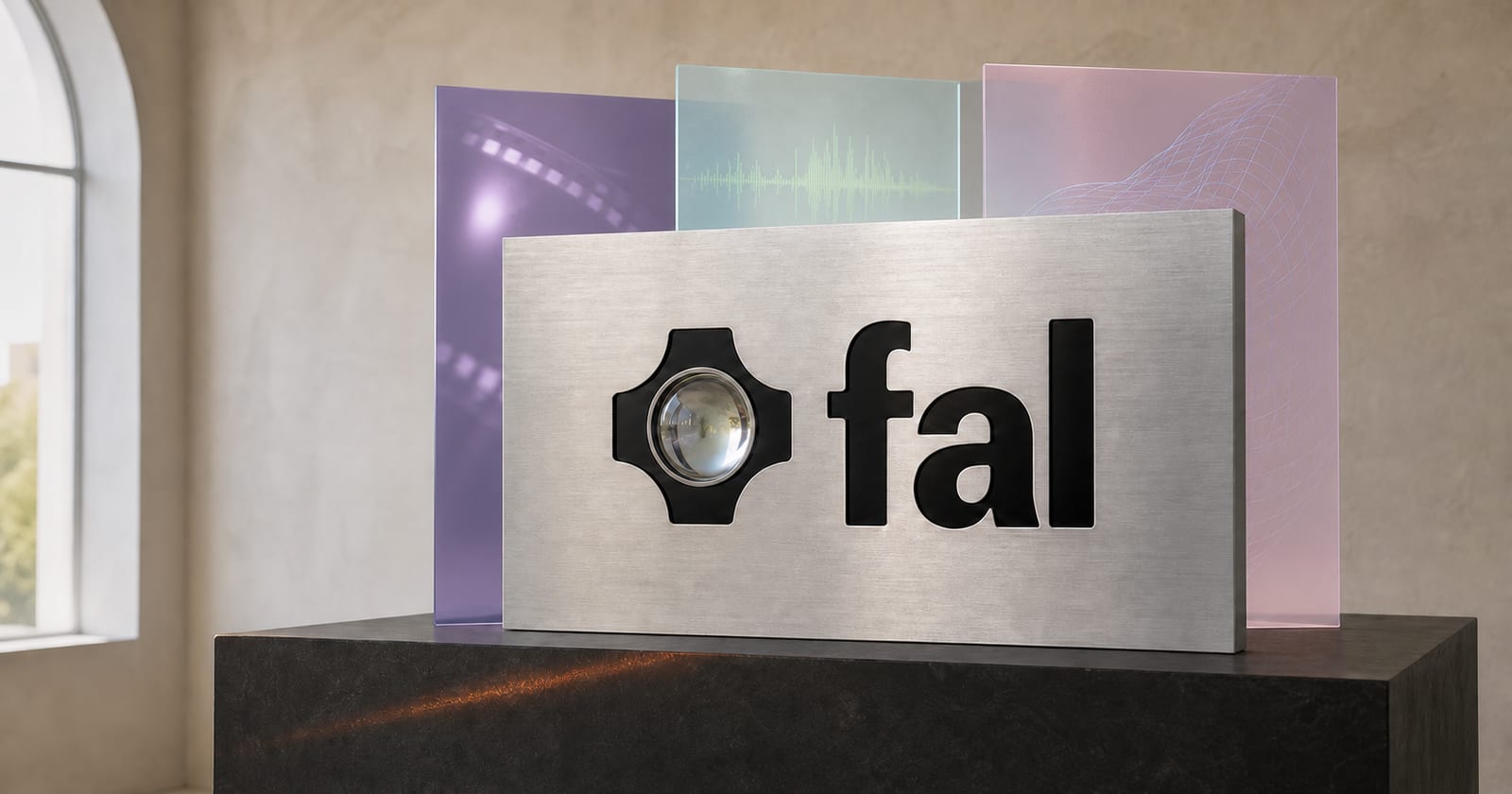
That is why welcoming fal as a platinum founding sponsor means more than adding another logo to the page. Its support helps turn LatentShift AI Conference first edition from a plan into a real day for engineers in İstanbul. Just as importantly, this is a partner whose work belongs in the same technical conversation as the conference.
From an infrastructure problem to a generative media platform
fal was founded in 2021 by Turkish engineers Burkay Gür and Görkem Yurtseven. The company’s account starts with infrastructure problems they had seen while working at Coinbase and Amazon. The founders later described the original idea as scaling compute for Python, before the team found its sharper problem when image-generation models began moving from research into products. The models were compelling, but they were slow and difficult to operate.
That observation became a company focused on the infrastructure behind generative media. Today fal describes itself as the Generative Media Platform for Developers. In a May 2026 company update, it said more than 2.5 million developers were building on the platform and named Amazon MGM Studios, Canva, and Adobe among the companies running production workloads there.
The scale is notable. The shape of the product is more relevant to us.
One platform, several routes to production
At the most direct level, fal Model APIs provide one interface to more than 1,000 models across image, video, audio, speech, music, 3D, and multimodal generation. A team can test models in a playground, compare options in the Sandbox, or combine multiple steps into a Workflow without building every piece of orchestration first.
The same API supports different operating patterns. A quick experiment can make a synchronous call. A production pipeline can submit work to a managed queue, track it asynchronously, or receive the result through a webhook. Interactive products can use streaming or real-time WebSocket endpoints when feedback and latency change the experience.
For teams bringing their own code and weights, fal Serverless deploys custom models and pipelines onto GPU infrastructure that scales with demand. For training, fine-tuning, batch jobs, and other sustained workloads, fal Compute offers dedicated GPU instances with direct SSH access.
This is more than a catalogue of models. It is a set of paths from an idea to something people can actually use.
Why the fit matters
LatentShift is interested in what happens after the first successful output. The model generated an image; now what happens when ten thousand people ask at once? The pipeline works; now where are its latency, cost, and failure limits? The endpoint is live; now can the team trace a bad request, roll back a revision, absorb a traffic spike, and understand what it is spending?
fal’s documentation treats those questions as first-class engineering work. It covers queueing and retries, request cancellation, cold starts, concurrency controls, health checks, revisions and rollbacks, logs, metrics, OpenTelemetry traces, and data retention. Those are not the glamorous parts of a demo. They are the decisions that determine whether the demo can become a dependable product.
That is almost a direct description of the stories we want on the LatentShift AI Conference’s stage: real constraints, visible trade-offs, measurable outcomes, and the operating detail hidden behind a clean interface.
“fal is built for engineers bringing AI into production, and we’re happy to be here with this community.”
Umut Günbak, Operations at fal
The fit does not change our editorial standard. Sponsorship does not turn the program into a product tour: no vendor pitches, and no claims without useful engineering substance. What fal’s backing protects is the environment around that program where the conditions in which honest technical exchange can happen.
What founding support makes possible
A first edition has no previous year to lean on. There is no inherited stage, production setup, audience, or operating rhythm. Every dependable part has to be built for the first time.
Founding sponsors give us room to do that work properly. Their support helps us keep student and community tickets deliberately affordable, plan for recording and captioning, and pay for the less visible layers of a good conference: venue, sound, food, access, and the people who make the day run. fal is not alone in that effort, but its platinum commitment is an important part of the foundation.
There is a useful symmetry here. fal works on the infrastructure most users never see beneath creative AI products. A sponsor plays a similar role beneath a community event. When it works, attendees should not have to think about the budget line that made the microphone reliable or the recording possible. They should be able to concentrate on the idea being shared.
Seeing fal on the founding sponsor list carries another kind of weight, too. A company founded by Turkish engineers, now serving a global developer community, is backing a new production-AI gathering in İstanbul. It shortens the distance between the local engineering community and the systems being built at global scale.
Thank you, fal
On 17 October 2026, LatentShift AI Conference will bring 750 engineers into one shared program for the first time: one day, one stage, and a lot of production lessons that are usually left out of launch stories. fal’s support is helping us build the room where those lessons can travel.
As a founding sponsor, its place in the first-edition record will remain there. We are glad that the company behind so much generative media infrastructure chose to help lay the infrastructure for this community, too.
Thank you to the fal team for backing the first shift. If you want to understand what they are building, start with the fal documentation.