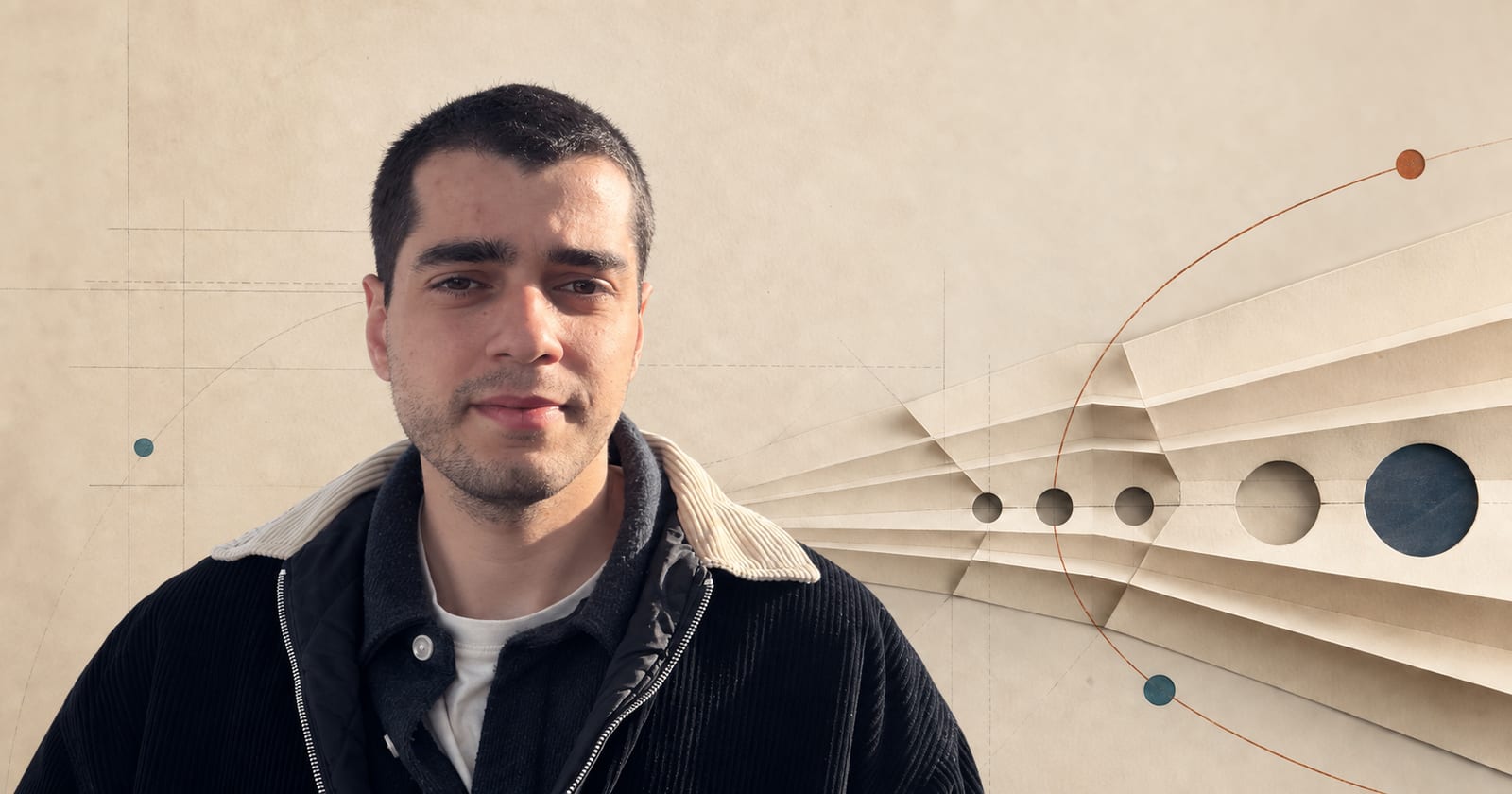
Kaya Gokalp’s public work crosses an unusual range of systems: scientific instruments, numerical computing, programming-language tooling, and software built for other developers.
He is a Staff Software Engineer at Sonar. He joined the company after its May 2026 acquisition of Gitar, where he had worked on developer tooling. That is the current chapter of a path whose earlier artifacts are still visible in papers, repositories, and release notes.
Software that meets the physical world
Kaya co-authored a 2023 paper on the improved X-ray detector aboard Sharjah-Sat-1. The Sabancı University record describes work across detector design, software, data handling, and ground calibration.
The paper does not provide a contribution statement, so it would be wrong to assign one component to Kaya alone. What it does show is participation in a system where software has to coexist with physical instrumentation, constrained resources, and evidence gathered before launch.
A separate paper examined a hybrid CPU and GPU numerical solver for modelling composite structures. Here too, the useful details are the constraints: performance matters, but so do numerical accuracy and validation against another method.
The toolchain around the code
Kaya describes himself on GitHub as a contributor to Sway, a programming language in the Fuel ecosystem, and as someone interested in programming-language research.
His visible work for Fuel includes telemetry releases, continuous-integration configuration, local Docker setup, trace handling, and Rust SDK maintenance. These are not separate from shipping software. They are the machinery that lets a team build, test, observe, and release it repeatedly.
That work is easy to overlook because it sits around the feature a user sees. A release remains difficult to trust if its dependencies cannot be reproduced, its failures cannot be traced, or its setup only works on the original developer’s machine.
From a small team to Sonar
The Gitar acquisition announcement records the recent transition into Sonar. We will not attribute a whole product to one engineer, but Kaya’s submitted biography identifies him as a founding engineer at Gitar.
Moving from a small team into a larger engineering organization changes the context around the work. The code now has to meet established systems, users, and practices. Kaya’s earlier record suggests familiarity with exactly that kind of boundary, from research prototypes to shared infrastructure.
We are happy to welcome Kaya to the first LatentShift edition in İstanbul on 17 October. You can explore his public work on GitHub or connect with him on LinkedIn.